
Self-Defense for Teens in St. Charles, MO: Practical Skills and Confidence for High Schoolers
Self-defense for teens in St. Charles, MO is about more than learning how to throw a punch. For a high schooler, it is about walking into school, a parking lot, or a part-time job with their head up, knowing how to spot trouble early, set a boundary with words, and — if it ever comes to it — protect themselves physically. That kind of confidence is not something a teen picks up from a video. It comes from practicing real skills with a coach, week after week, in a room full of other teens doing the same thing.
At Wolves’ Den Training Center, teens train in self-defense as part of a program built for their age group: serious enough to be useful, structured enough that parents know exactly what their teen is learning, and fun enough that teens actually want to come back.
Why Teens Need Practical Self-Defense Skills
High school brings situations younger kids never face. Teens drive, work evening shifts, walk to their cars after practice, and spend more time out in the world without an adult nearby. Most of those situations are perfectly safe — but a teen who has never thought about personal safety is the one most likely to freeze if something feels wrong.
Good self-defense training starts long before any physical technique. Teens learn situational awareness: how to notice when something is off, how to trust that gut feeling instead of talking themselves out of it, and how to leave a situation early instead of waiting for it to get worse. They learn how to say no clearly and firmly, how to use their voice, and how to get help. The physical skills are the last resort, not the first lesson — and that order matters, because the teens who need self-defense most are the ones who need the judgment that comes with it.
What Teens Actually Learn in a Self-Defense Class
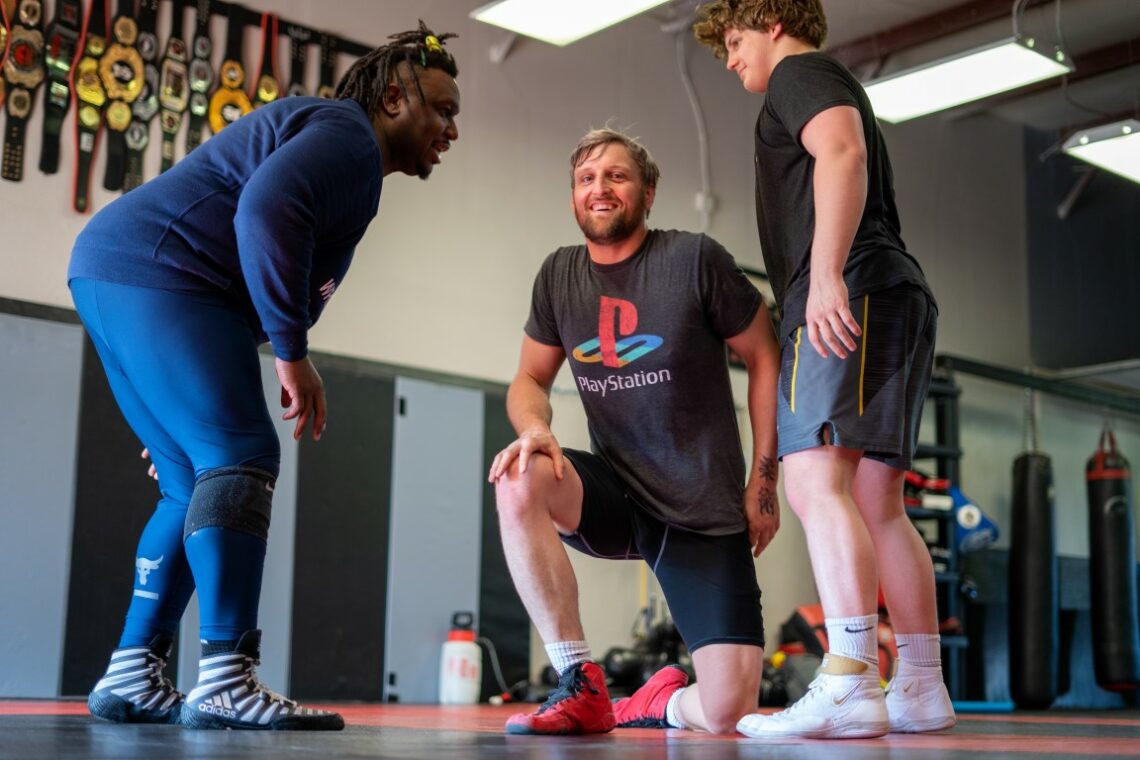
A teen self-defense class at Wolves’ Den covers the skills that work for a teenager’s real life, not a choreographed routine. The physical side includes a solid stance and balance, how to create distance from someone grabbing a wrist or a shoulder, how to escape common holds, and how to strike effectively enough to get away — palms, elbows, knees, and the basics of footwork. Everything is practiced with partners their own size and age, under a coach’s supervision, so the reps are realistic without being rough.
Just as important is what happens between the techniques. Coaches talk through scenarios teens actually run into: someone getting pushy at a party, a stranger approaching in a parking lot, a confrontation at school that could turn physical. Teens practice the words to use, the exit to take, and the moment to stop talking and move. That combination — a plan and the physical ability to back it up — is what turns nervousness into confidence.
How Teen Self-Defense Differs From Adult Classes
Teens are not small adults, and their classes should not treat them like they are. The pace, the language, and the scenarios are all built for high schoolers. Coaches keep the atmosphere encouraging rather than intimidating, and the training partners are other teens, so nobody is learning next to a 200-pound adult. The focus is on skills a teenager can actually use — awareness, boundaries, escapes, and confidence — rather than advanced techniques that take years to build.
Parents are welcome to watch a first class and see exactly how it runs. There are no surprises in the curriculum: the program is designed so a parent can sit in, see the drills, hear the coaching, and know what their teen is practicing.
The Confidence That Shows Up at School
The change parents notice first usually is not physical. It is the way their teen carries themselves. A teen who has practiced standing their ground in class tends to stand a little taller in the hallway. They speak up more, they handle peer pressure more calmly, and they stop shrinking from situations that used to make them anxious. That is not a side effect of self-defense training — it is the point. Learning that you can handle yourself, even in a hard moment, changes how you move through the world.
For teens who have dealt with bullying or intimidation, that shift can be a real turning point. Self-defense does not teach a teen to go looking for a confrontation. It teaches them they do not have to be afraid of one — and that is often enough to change the dynamic entirely.
What a First Self-Defense Class Looks Like for a Teen
First-timers do not need any experience, any fitness level, or any gear. A teen shows up in comfortable athletic clothes, meets the coach, and joins a warm-up with the rest of the class. The first session covers the fundamentals: stance, movement, and a few simple escapes, practiced slowly with a partner. The coach walks the room, correcting form and answering questions, and the class finishes with a cool-down and a quick review of what was covered.
Classes run seven days a week, mornings and evenings, at Wolves’ Den Training Center, 6893 Lake Saint Louis Blvd in Lake Saint Louis — a short drive from St. Charles — with a second location at 20 The Plaza in Troy, MO. Sessions run one hour, so a class fits around school, homework, and practice schedules. Check the full schedule to find a time that works.
Your Teen’s First Self-Defense Class Is Free
The best way to know whether self-defense training is right for your teen is to let them try one class. The first class at Wolves’ Den Training Center is free — no commitment, no pressure, just an hour of real skills with coaches who know how to teach teenagers.
Visit our classes page to see self-defense alongside our other programs — Brazilian jiu-jitsu, kickboxing, Muay Thai, wrestling, and youth programs for kids from age 5 — or learn more about the Den and the coaches who will be teaching your teen. You can also browse our gallery and videos to get a feel for the gym before you walk in.
Call us at (314) 601-4537 or stop by 6893 Lake Saint Louis Blvd in Lake Saint Louis — or our second location at 20 The Plaza in Troy, MO — to book your teen’s free first self-defense class. One hour, and they will walk out a little taller.